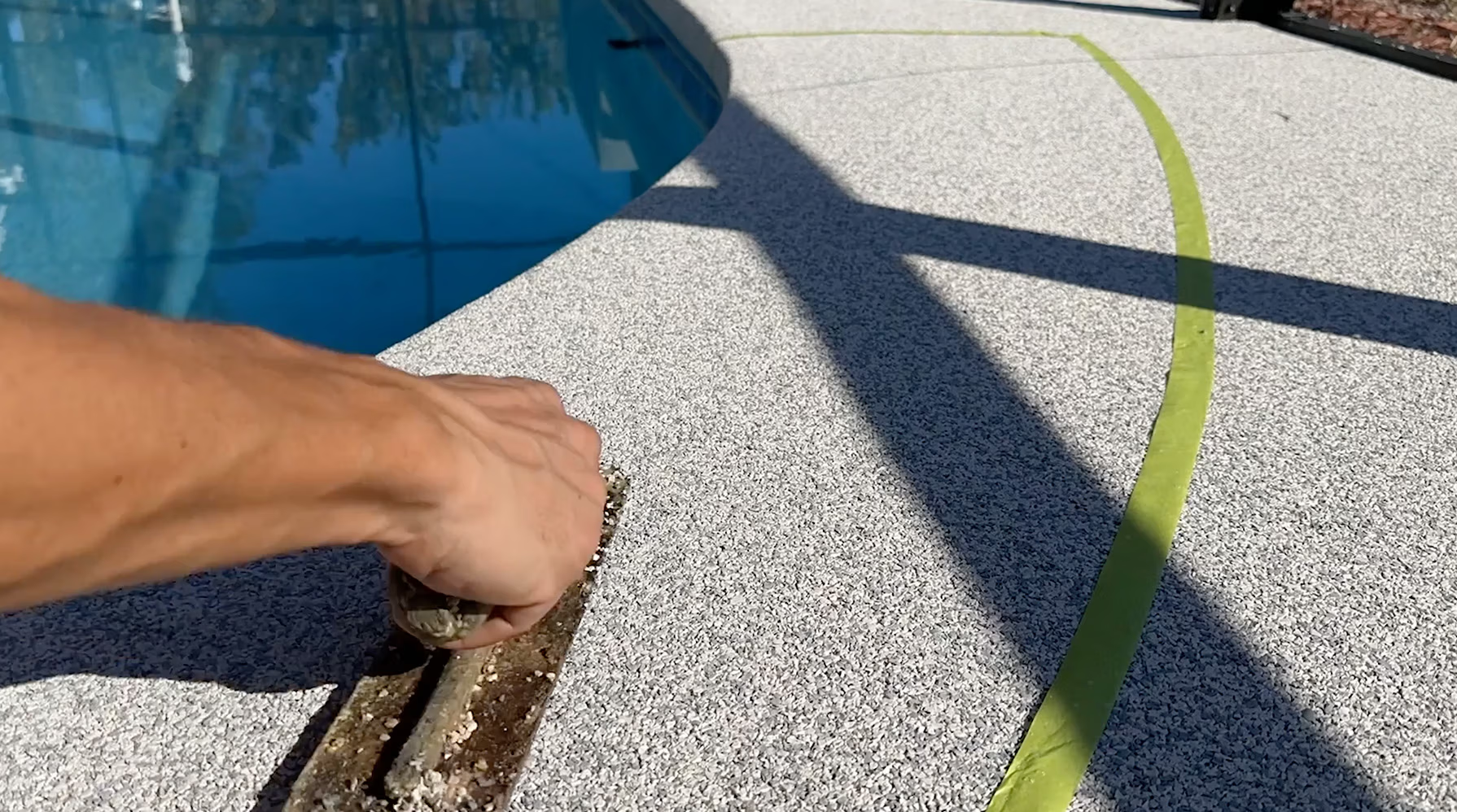
What is a ‘seal’?
Rollcoating, sealing, resealing — these all refer to the same recommended professional maintenance process for rubber decking, just under different names. What’s actually happening is straightforward: a fresh layer of binder is applied to the top of the surface, where it percolates down slightly into the material to refresh color and rebuild bond strength in the top layer that takes the most wear. The problem with calling this process “sealing” is that rubberized poured-in-place decking is designed to be porous on purpose — ground water can evaporate through this product instead of becoming trapped underneath, which is an immense positive trait in outdoor environments and helps these products resist peeling.
Superior Surfacing doesn’t use the “s” word, though — “sealing” implies closing off that porosity, which isn’t what happens with correctly done routine maintenance, and isn’t something you’d ever want done to your deck. That’s why we call it a binder roll-coat or maintenance coat instead. When you hear a company call it “sealing” — especially a newer company — it’s often a sign they don’t fully understand what the process is actually doing to the surface.
Why is this roll coat a good idea?
A roll coat refreshes the very top layer of the surface, which naturally experiences some minor oxidation and color dulling from years of constant UV and visible light exposure — especially in Florida. The process adds a fresh layer of dirt resistance and bond strength to that top layer, the part of the deck absorbing the most daily environmental exposure.
How often should I have this process done?
Unless you own an amusement park, a casino, or a public splash pad, we don’t recommend roll-coating your Resilion anywhere close to every two to three years. If you’re a single-family homeowner with a Resilion deck, give us a call every six to eight years or so — typically six years for cageless decks and eight years for under-cage areas. That interval can shift slightly: very light colors sometimes call for more frequent roll coats, since a fresh coat helps the surface repel dirt more effectively where dirt shows the most, and very bright or dark colors can also benefit from more frequent coats, since they’re more prone to visible color change that a roll coat will revive.
This is an important distinction, since cheaper products or less expert installation will deliver a more brittle or weaker system. If you’re told you need to roll coat or “seal” your deck every two to three years just to keep your warranty or reach an expected lifespan, take that as a sign you may be getting a lower-quality deck or installation than you realize. Our recommended interval of six to eight years is relatively conservative, and isn’t required at all to keep your residential warranty valid. For commercial environments, our recommended interval spans a spectrum — from every one to three years in the most extreme-traffic spaces to every four to six years in a typical community HOA pool deck.
For comparison, the Resilion rollcoat maintenance is half to a third as often as the recommended maintenance of not only many comparative rubbers, but also pavers and painted surfaces.
Why Some Companies and Products Recommend Resealing More Often Than Resilion
- It’s a recurring revenue stream, and more frequent visits mean more billable maintenance work.
- It can quietly compensate for installation shortcuts — like poor compaction, insufficient binder, or overuse of harsh trowel release agents — that leave a deck needing more frequent reinforcement than a properly installed one would.
- Low-quality rubber, even when installed correctly, simply needs more maintenance, because its more brittle granules absorb a larger share of each new roll coat’s binder instead of using it to strengthen the surface bond.
The Warranty Trap
Some warranties require resealing on a specific, often aggressive schedule to remain valid — and low-quality EPDM systems in particular may genuinely need that frequency just to hold up. If you’re being asked to reseal every two to three years to keep a warranty active, it’s worth asking directly whether that reflects the actual needs of the material, or whether it’s effectively a way of extracting ongoing payment for coverage you thought you’d already paid for.
Resilion does not require any roll coat on residential projects to keep its warranty valid. This maintenance process is only recommended, not mandated by warranty terms.
Why Over-Sealing Isn’t Actually Better
It might seem like resealing more often is simply extra protection, but there are real downsides to doing it too frequently. Rubberized surfacing is designed to be porous, allowing water to pass through rather than becoming trapped underneath. Each roll coat gradually fills in some of the natural voids between granules — and after enough coats, a surface engineered to be porous can become effectively non-porous. That’s a particular problem in areas where the deck was installed over drains, since it can interfere with drainage that was working fine before.
Over-sealing also risks locking in dirt if the deck wasn’t spotless before the coat was applied. If a company cut corners on the original installation, there’s a good chance the same corner-cutting shows up in how carefully they clean your deck beforehand. But even done correctly and professionally, each roll coat is still an inconvenience, taking your deck and deck furniture out of use for a few days.