What Separates “Luxury Grade” From “Standard Grade” Rubberized Surfacing?

What Separates “Luxury Grade” From “Standard Grade” Rubberized Surfacing?

Beyond the material selection itself, most of the luxury look and low-maintenance performance of a rubberized pool deck depends on the craftsmanship and standard of the person installing it. Many homeowners assume that inlays, borders, or design elements are the real marker of installer skill. That’s backwards — those attention-grabbing elements can often distract from lower craftsmanship in the fundamentals, and it’s those fundamentals that actually deliver the luxury look and feel across every square inch of a pool deck.

True craftsmanship shows up in finishing details that most new customers can’t yet name, but can sense all the same. Once you know what those details are, the difference in quality becomes impossible to ignore. Here’s what actually separates a luxury-grade installation from a standard one.

It’s Not About the Inlay — It’s About the Craftsmanship

Most installers who work with rubberized surfacing can add a border, a silhouette, or a custom design element. That skill is real, but it’s also common enough that it doesn’t tell you much about overall craftsmanship. The details below are harder to execute well, harder to fake, and far more predictive of how your deck will actually perform over time.

Sign #1: Compaction

Compaction is the single most important factor in achieving a true luxury finish, and it affects every square inch of the installation. Proper compaction creates a smoother, denser surface that resists dirt, wear, and premature breakdown — significantly extending the life of the deck.

Excellent compaction shows a tight, uniform texture. Mediocre compaction shows visible pockmarks throughout the surface — imperfections that detract from the appearance while also trapping dirt and accelerating wear. Achieving genuine, top-tier compaction requires both technical expertise and real craftsmanship, since it means hand-troweling the roughly 40 million rubber particles that make up a typical deck. Done right, the result is a surface that looks cleaner, feels more refined underfoot, and lasts significantly longer.

In short: compaction is what determines whether your deck delivers an extra decade of performance, holds up to aggressive pressure washing, resists dirt accumulation in the first place, feels better underfoot, and has a refined texture that barely looks like rubber at all.
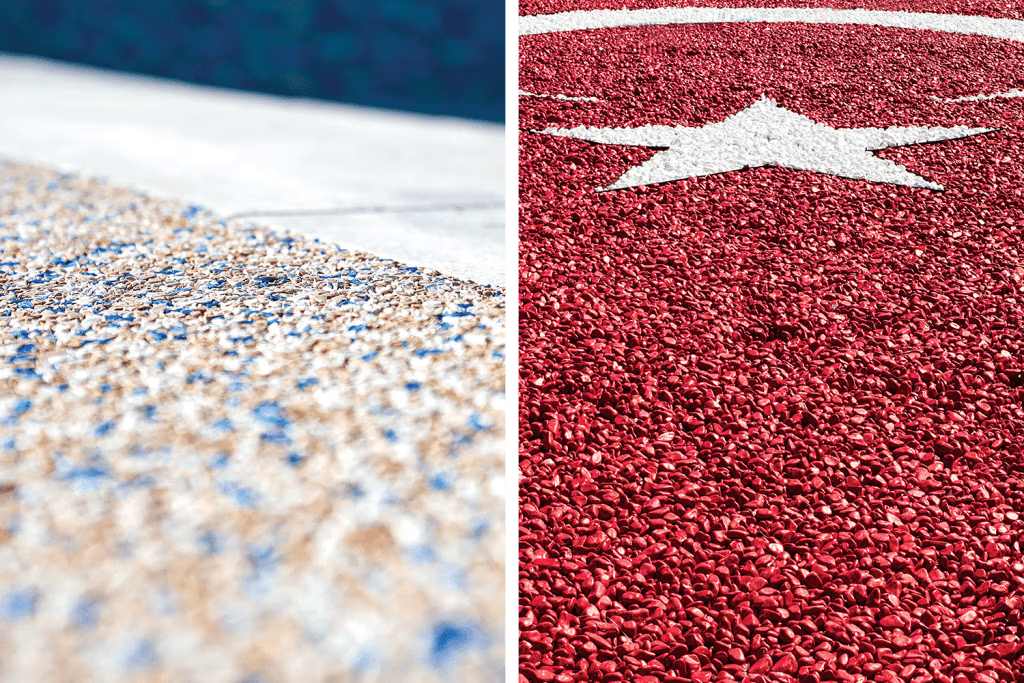
Our compaction vs. a competitor’s compaction


Sign #2: Joints Between Color Pours

Less experienced installers often use Schluter strips to separate different color pours. These strips create a permanent, visible break in the surface that disrupts the seamless appearance the material is known for. A more skilled crew pours colors directly next to one another, creating a cleaner, more refined finish without unnecessary divider strips.
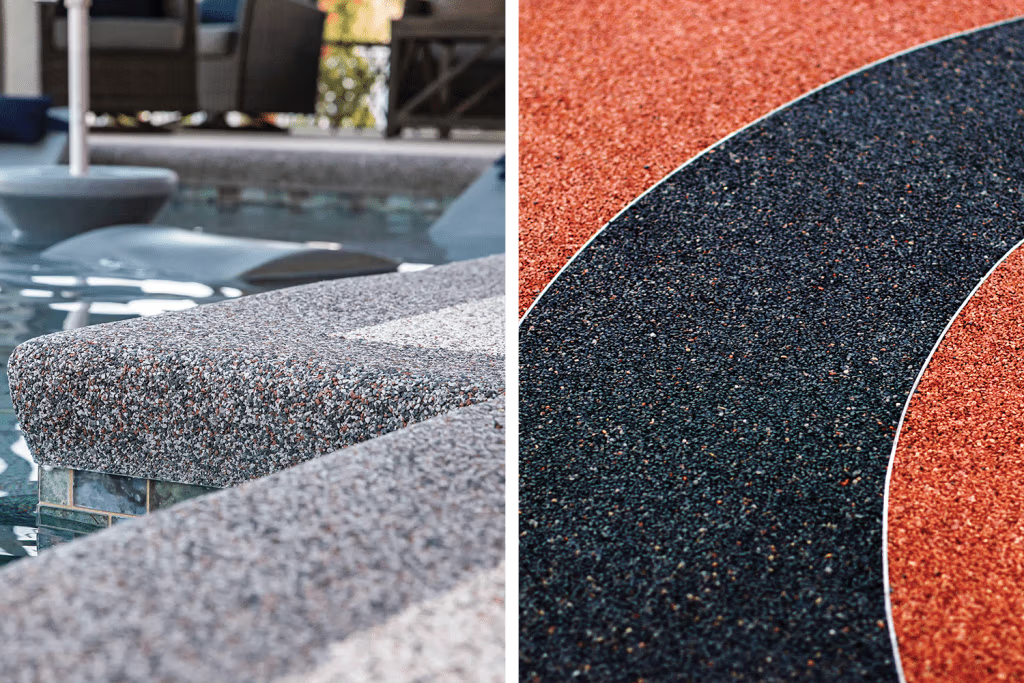
Our color pours vs. a competitor’s color pour with a Schluter strip.


Sign #3: Cold Joints

Cold joints occur where installation stops and resumes, since rubberized overlays are wet-pour systems. They’re unavoidable on some projects — especially larger ones — but they should never be obvious. Now in our 21st year of installation, our standard avoids a cold joint entirely on 95% of residential projects. When one is needed, it has to be virtually invisible.
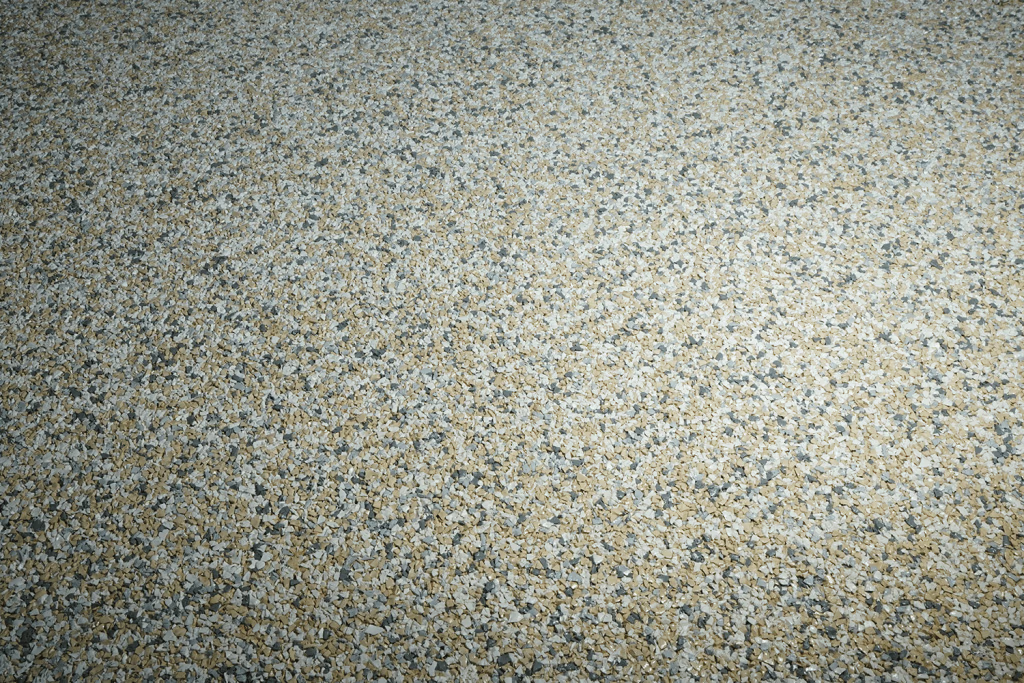
A sample we’ve created with a cold joint down the middle.


Less experienced installation companies often end up with multiple visible cold joints, especially on larger projects. In one real comparison, a competitor’s installation showed a clearly visible cold joint with noticeable premature wear at that exact spot — a sign that the mismatch in compaction or trowel quality across the joint became a structural weak point over time, not just a cosmetic one.
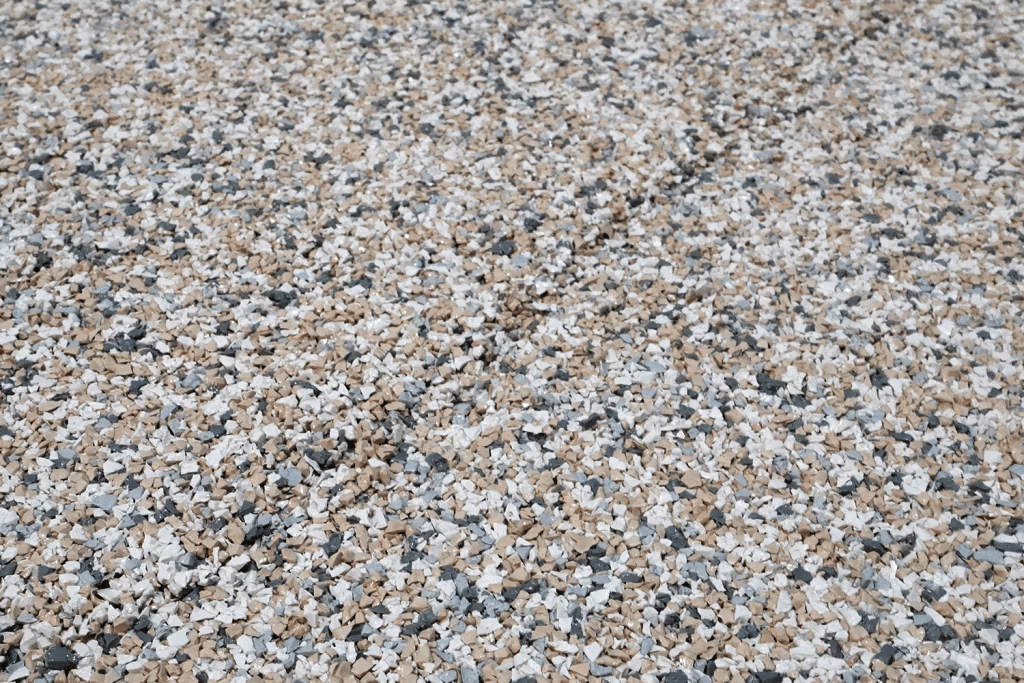
A cold joint from a competitor


Sign #4: Wrapped Copings and Edge Terminations

Edge work is another clear indicator of expertise. Wrapped copings — where the surface covers not just the vertical face of the coping but also the underside of the cantilevered edge — are among the most difficult techniques in rubber installation, and many installers avoid them entirely.
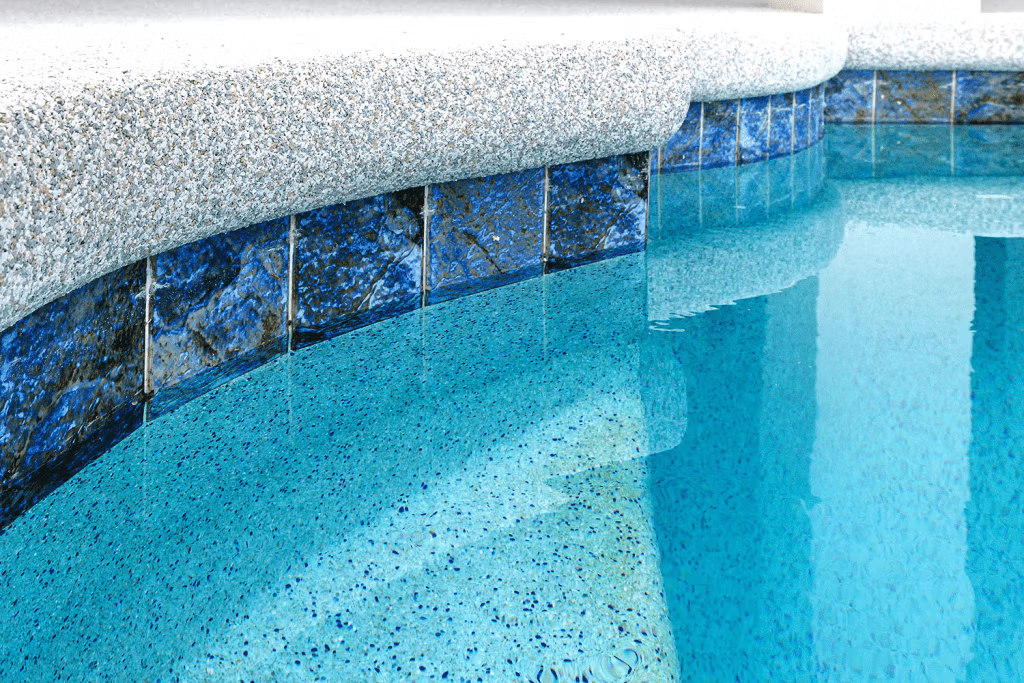
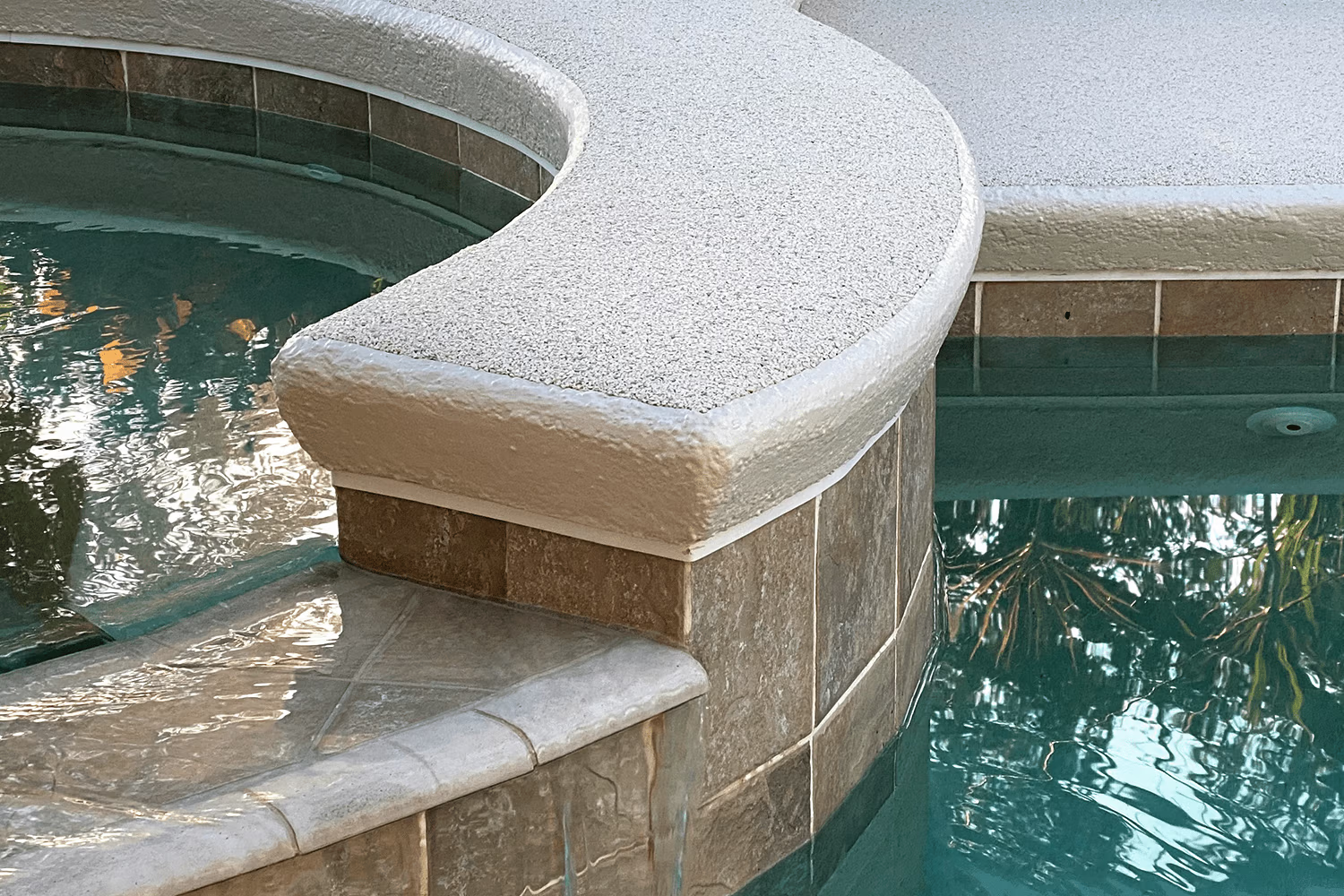
Our wrapped coping


Instead, some companies offer “mock wrapped” finishes that stop short of the lowest inch or two, leaving the most difficult portion of the coping uncovered. It can look similar to the real thing from above at first glance, but it reads as a budget installation once you know what to look for — or simply look at it from the side.

Here’s a competitor’s attempt at the more difficult, fully wrapped style, photographed just a year after completion. It already shows unevenness and bubbling at the coping — a clear sign of how difficult this detail is to execute properly.
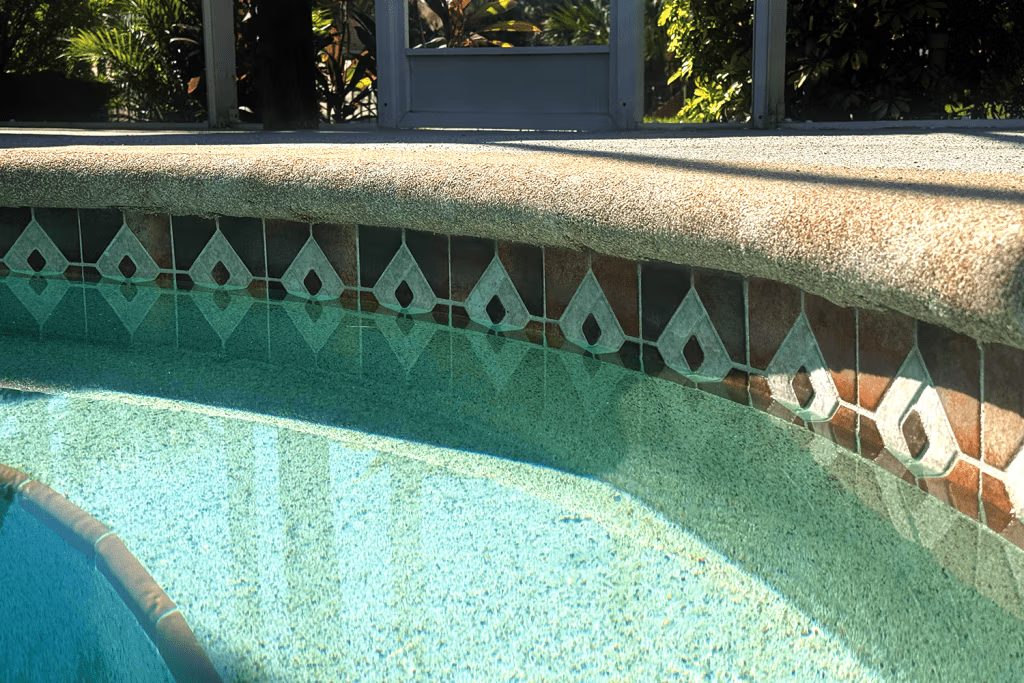
Poorly wrapped coping from a competitor


It isn’t just complex features like wrapped copings where expertise shows up, either. Even a simple edge termination, like a clean key cut at a threshold or walkway, requires a skilled craftsman’s hand to get right.
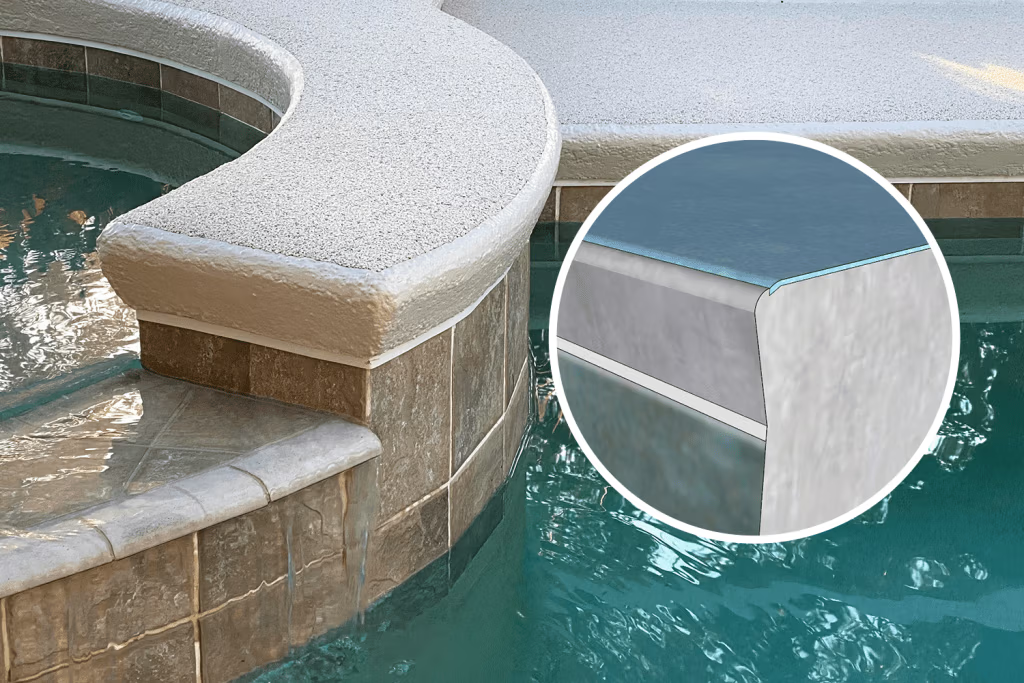
A key cut done right

Final Thoughts

Why These Details Matter More Than Design Elements

These details are what elevate rubber overlays to a truly luxury standard. It’s a standard that applies to both look and performance, since great craftsmanship is central to both the textural finish and the deck’s longevity. Oftentimes, the extras — decals, inlays, borders, even a glitter additive — distract from the fundamentals that actually determine a deck’s beauty and performance. As much as an interesting button or pocket can add flair to a suit, the quality of the fabric and its cut matter far more in the end.
Katy (Staff)
Facebook
X
LinkedIn

Table of Contents

Search
Downloads

Explore Our
Brochures

01/

Our Latest Booklet
Explore our complete range of premium pool deck surfacing solutions, discover the benefits of Resilion™, and browse featured residential and commercial projects.

02/

Our Color Blend Collection
Explore over 120 color options or create your own custom blend. We can combine materials, colors, and textures to develop a unique surface solution tailored specifically to your project.

Get started

Ready to transform your pool deck?

Our globally‑recognized rubberized overlay installations are proven to help you overcome maintenance overheads, safety concerns and achieve the level of performance & sophistication you’ve been looking for.

FAQs

We’ve installed poured-in-place rubber coatings in Southwest Florida since 2005 -- that’s now over 21 years. We have no side offerings, no recent pivots. Just two decades of focused experience in one of the harshest UV environments in the country.

Every rubber surface supplier claims to offer the best product. We're not suppliers — we're installers, which means we're also customers. We don't accept hollow claims any more than you do.
What we trust is long-term performance in Florida's actual conditions: extreme UV, humidity, chlorine, and humidity/mold risk. Most rubber products and installers are relatively new to this market, riding the wave of growing demand without the track record to back it up. We've been testing and installing products side-by-side for over two decades, and Resilion™ has earned its place as our clear choice — not on paper, but on aged reference projects you can visit in person.
The results speak for themselves: a 25-year expected residential lifespan, half to a third the maintenance of competing systems, minimal color fade under intense UV exposure, and heavy bleach compatibility for easy cleaning.

We install Resilion™ for residential and commercial pool decks, patios, atriums, boat docks, walkways, catwalks, splash pads, and balconies.

For interior safety applications — particularly commercial poolside bathrooms — we install Resilion Nonporous, purpose-built for safety-conscious wet environments.

Even though you can park and drive on Resilion™, we don’t install it for driveways as urethane glues are sensitive to gas or diesel spills. Resilion™ is better suited for ‘people spaces’ like pool decks and patios.

Every installer claims to be the best. We'll let the record speak instead.
Multiple manufacturers have selected us to lead global installer training and major international projects — work spanning prestigious resorts, casinos, and amusement parks across 46 states and 4 continents. We were the only rubber installers chosen to represent the craft on the nationally syndicated DIY Network series Rock Solid. We've completed over 16 installations for Universal Studios and counting.
In addition to this industry recognition, the difference shows in the finished product. Our luxury techniques and precision finishing produce results that look fundamentally unlike standard rubber installation — because they are.

Most Resilion™ projects are $16-20 per square foot. Complexities to pool copings or elevated prep services are listed as separate line items in addition to the square footage cost. All in, most projects between 600 and 900 square feet are between $10,000 and $20,000. We occasionally bid projects under $10,000 (smaller patios without the complexity of a pool). Every estimate is free, on-site, and conducted without pressure.

We serve Lee, Charlotte, and Collier counties of Florida for residential projects. We serve commercial work all over the state, country and globe.

Our residential warranty runs 10 years, covers both materials and labor, and is not prorated — meaning it doesn't quietly diminish over time. No professional maintenance is required to keep it valid. It covers both installation-related failures such as delamination and bond failure, and product-related defects. The exact language is included in your contract and available to review before you commit to anything.
We'd also offer this: we've been in business locally since 2005 — longer than our own warranty period. That matters, because a warranty is only as good as the company standing behind it.
A word of caution on warranties in this industry. Long warranty terms from newer companies can look attractive until you read the fine print — required frequent professional maintenance to maintain the warranty, references to manufacturer warranties the client can never actually access, labor-only coverage, or companies that won't outlive the promise they're making. We've seen a 15-year warranty in this market with a single carveout that rendered it nearly worthless: 15 years — but only 1 year in Florida.
Read the language. We'll gladly help you understand what questions to ask.

In a single-family residential setting, Resilion™ carries an expected lifespan of around 25 years in Florida's outdoor conditions.
For shared and commercial spaces, lifespan scales predictably with use. HOA pool decks typically perform for around 20 years. Even the heaviest commercial environments — theme parks and resort facilities — can expect 12 or more years in non-submerged applications.