How Long Should a Pool Deck Surface Last in Florida?
A pool deck isn’t a purchase anyone hopes to make twice for the same home. For those who take their outdoor space seriously and invest in a premium coating, it’s meant to be the last one. Nowhere is the lifespan question more confusing than with rubberized resurfacing, a product still unfamiliar to most homeowners. Some installers will quote you 10 years of performance,, others will say 20 or more. The truth is, both answers can be correct — it just requires more nuance than a single number can capture. “Rubberized pool deck” describes a wide spectrum of materials and craftsmanship, and in Florida’s relentless sun, heat, and humidity, that spectrum reveals itself quickly and permanently.
EPDM vs. TPV: Two Categories of Rubber
Nearly all poured-in-place rubber surfacing begins as one of two raw materials: EPDM (ethylene propylene diene monomer) or TPV (thermoplastic vulcanite). EPDM is the original playground-grade granule, a dependable material that has served the industry well for decades. It performs admirably in the right application, but under Florida’s uncompromising UV exposure, it typically delivers 10 to 15 years of service before it needs to be replaced — respectable, but far from exceptional.
TPV came along later, marketed as a premium alternative with better color and UV performance. Here’s the catch: “TPV” isn’t a strictly regulated term, so quality varies enormously between suppliers. A lower-grade product labeled TPV often performs barely better than standard EPDM — around 15 years in Florida’s climate, not the dramatic upgrade the name implies.
Why High-Grade TPV Lasts Nearly Twice as Long
The real lifespan jump comes from combining a genuinely high-grade TPV granule with a time-tested and certified installation process. When both are done right, you can realistically expect around 25 years of performance from a residential pool deck in Florida’s high-UV, outdoor environment — roughly 10 years longer than lower-grade TPV, poorly-installed TPV, or standard EPDM.
Because this is such an installer-dependent material, product grade is only half of the equation. Installation quality — compaction, binder ratio, release agent use, and troweling technique — plays just as large a role in how long a deck actually lasts. Two decks poured from the same bucket of granule can age completely differently depending on who installed them.
Florida’s Sun Is the Real Stress Test
Anywhere else in the country, a lower-grade rubber deck might coast for years without visible problems. Florida doesn’t offer that grace period. Constant UV exposure, heat, and humidity accelerate fading, oxidation, and binder breakdown faster than in almost any other climate.
Because we’re selective about the rubber systems we install and represent, we’ve tracked multiple decades of surface performance across real-world, outdoor Florida installations. Here’s a photo of a Resilion installation in Cape Coral, six years after it was installed. The small circle in the middle is a brand-new sample made in the same color as the original deck.
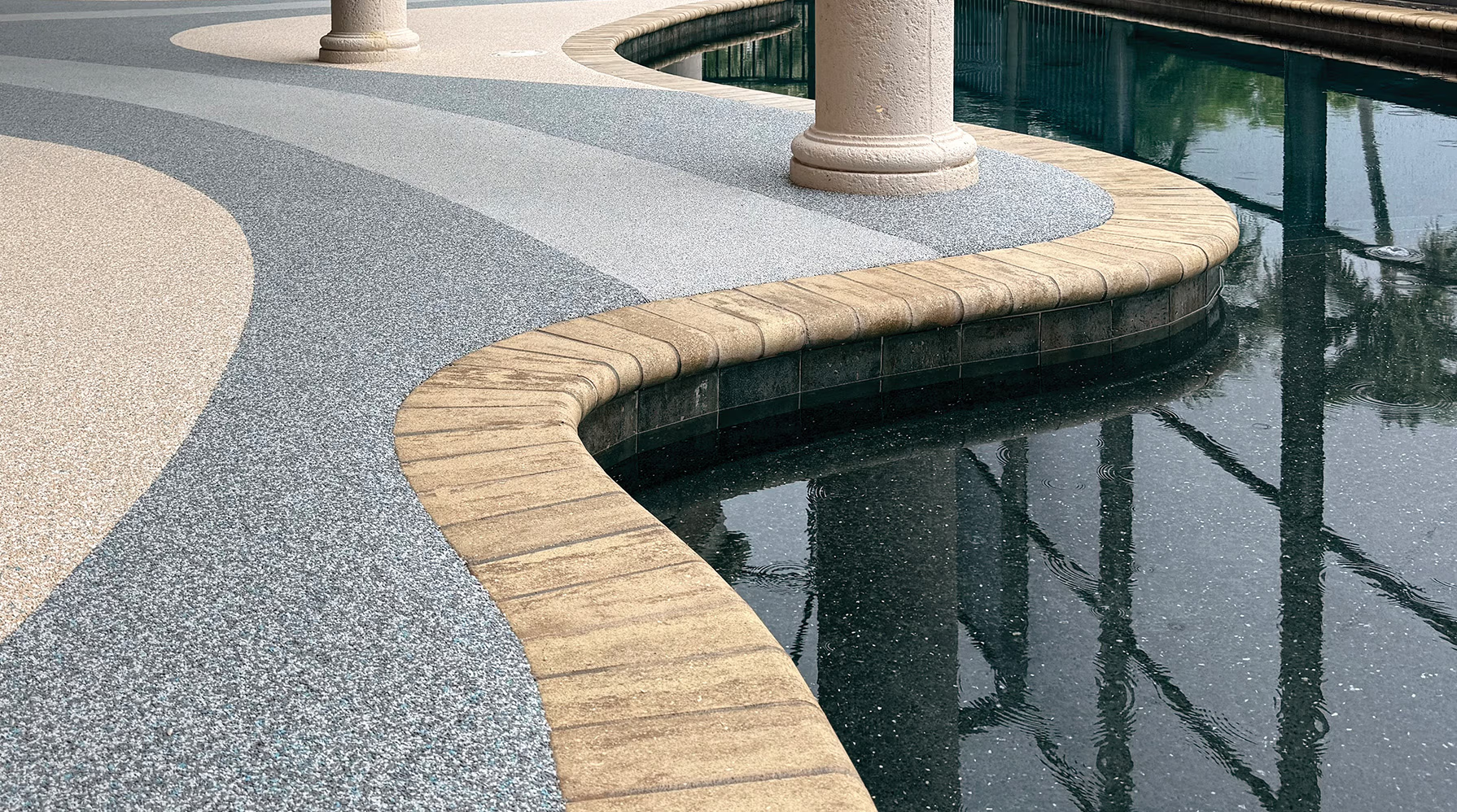
For this side-by-side comparison, no maintenance roll coat was applied to the original deck — it’s exactly as it was installed. Resilion does fade somewhat under Florida’s intense UV exposure, but thousands of installations over multiple decades throughout Southwest Florida have shown that fade to be minimal. By comparison, many alternative rubber systems need two to three professional roll coats in that same six-year window just to hold their color and keep their warranty valid.
What Actually Shortens a Rubber Deck’s Lifespan
Poor compaction is often visible right away, but most of the other issues on this list aren’t obvious on day one. They tend to show up five, ten, or fifteen years down the road — which is exactly why an installer’s track record matters as much as the product label on the bag of raw material. Here are a few reasons installer knowledge and ability can dramatically alter your deck’s lifespan:
- Poor compaction, which leaves gaps that trap dirt, accelerate wear, reduce material density per square foot, create a rougher underfoot feel, and weaken resistance to twisting, shear stress, and power-washing. It also falls short of a true luxury finish.
- Insufficient binder (a “dry mix”) that never fully encapsulates each granule. It’s easier to install than a properly bound mix, which is why less experienced installers sometimes lean on it.
- Skipping or shorting the primer step. We know of a company who actually applies primer only around the perimeter of a deck while skipping the middle of the deck entirely.
- Aggressive solvents, or simply too much solvent, used during installation, which can strip binder from the surface. This is tempting for new installers as it makes the deck far easier to install.
- Maintenance. Either under-maintaining your surface (could cause particle loss over time) or over-maintaining your surface (which may create drainage problems and premature replacement).
How to Get the Full Lifespan Out of Rubberized Decking
If you want your investment to last the full, extended lifespan a premium system is capable of, look for three things: a high-grade material with a documented performance history, a certified installer who follows the manufacturer’s compaction and binder standards, and a proven and low-maintenance upkeep — not one that requires “re-sealing” every two to three years just to keep the warranty valid.
Frequently Asked Questions
How long does EPDM pool decking last in Florida?
Typically 10 to 15 years, depending on installation quality and sun exposure.
How long does TPV rubber decking last?
It depends on the grade. Lower-grade TPV performs similarly to EPDM, around 15 years. High-grade TPV installed by a certified installer can last roughly 25 years in Florida’s climate.
Do rubber pool decks fade in Florida’s sun?
All outdoor surfaces experience some UV wear over time, but a high-grade TPV system shows minimal fading even after six years with zero roll coats applied.
How often do I need to reseal a rubber pool deck?
Anywhere from every two to three years for lower-grade materials to every 6-8 years for a premium, properly installed TPV system (numbers assume single-unit residential properties)